-2700x842-1920w.png)




What Does a TMJ Specialist Actually Do?
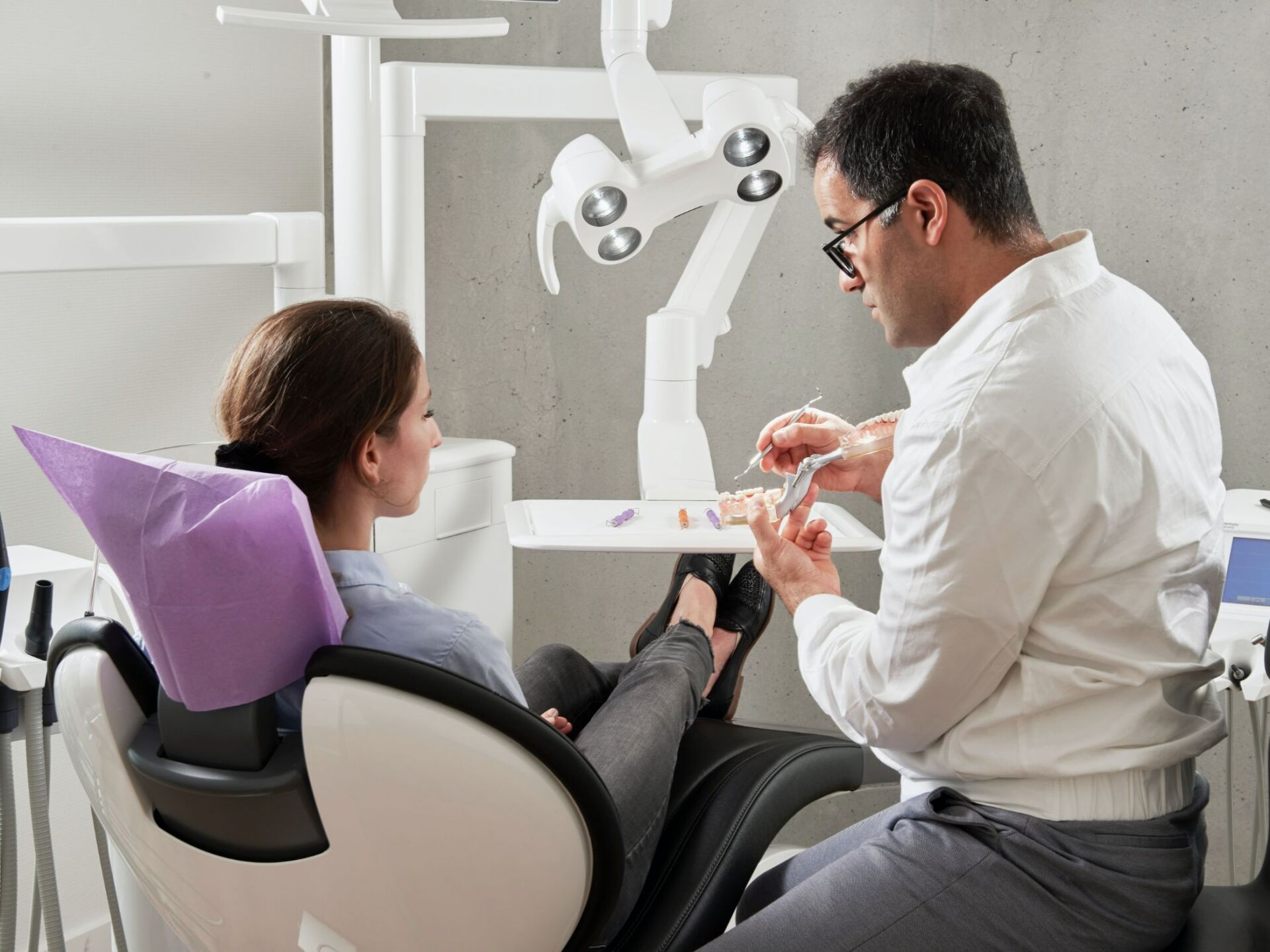
A TMJ specialist focuses on identifying the true cause of jaw pain, headaches, and related symptoms by evaluating how the joint, muscles, bite, and airway work together, then using that insight to guide precise, effective treatment that improves function over time, not just short-term relief. They do this by:
- Understanding how symptoms are connected across the jaw, muscles, and airway.
- Using advanced diagnostics to pinpoint the root cause.
- Creating personalized, multi-step treatment plans that are monitored and adjusted.
At
Restore TMJ & Sleep Therapy in The Woodlands, care is led by Dr. Katherine S. Phillips, a highly experienced clinician who has dedicated her career to the diagnosis and treatment of
TMJ disorders,
orofacial pain, and
sleep-disordered breathing. With over a decade of focused experience, her practice is built specifically around these conditions, allowing for a deeper level of clinical insight and precision. As a TMJ specialist with a combination of specialized education, hands-on experience, and ongoing involvement in research and professional organizations, Dr. Phillips provides care for TMJ disorders and related conditions that is not only thorough and data-driven, but compassionate, personalized, and grounded in proven, evidence-based methods.
How a TMJ Specialist is Different from Other Providers for TMJ Treatment
TMJ disorders can be treated by a range of providers, from general dentists to medical specialists, but not all can build treatment around how the jaw actually functions as part of a larger system. Instead, other providers typically approach TMJ-related symptoms through the lens of their primary area of focus.
For example:
General dentists focus on teeth, gums, and routine bite relationships. They may provide night guards or address visible wear, but typically don’t evaluate joint mechanics, muscle behavior, or airway involvement in depth.
Cosmetic dentists primarily focused on aesthetics. While bite changes may be part of treatment, they are not always designed with joint stability or muscle function as the priority.
Primary care providers or ENTs
often treat symptoms like pain, inflammation, or ear-related discomfort. While helpful for short-term relief, this approach usually doesn’t address how the jaw is functioning or why symptoms are occurring.
Each of these providers plays an important role in oral and overall health, but TMJ disorders frequently involve overlapping issues that require a more focused and coordinated evaluation.
A TMJ specialist is trained to look at the full picture—how the joint, muscles, bite, and airway move, interact, and contribute to symptoms—and use that information to guide diagnosis and treatment, evaluating problems more thoroughly and treating them more precisely, especially when multiple factors are involved. That difference in perspective is what shapes everything that follows, from identifying the root cause to building a treatment plan that actually resolves it.
While there isn’t a single officially recognized “TMJ specialty” in dentistry, the term usually refers to a dentist with advanced training and focused experience in areas like
orofacial pain–now
recognized by the American Dental Association as a specialty–and
dental sleep medicine, along with a clinical emphasis on diagnosing and treating dysfunction of the jaw joint, muscles, and related structures. Their work centers on the function of the TMJ and orofacial structures, and not just what can be seen on the surface.
What a TMJ Specialist Can Actually Do
Because TMJ disorders often involve multiple contributing factors,
accurate diagnosis and effective treatment require a deeper level of training and clinical experience than many providers have. A TMJ specialist can help you understand what’s behind your jaw pain, headaches, or sleep problems, connecting issues that may seem unrelated to build a treatment plan that doesn’t just relieve symptoms, but actually improves how your jaw functions over time.
Here’s how a TMJ specialist can provide better, more effective treatment for your TMJ symptoms:
1. They understand the full picture and how your symptoms are connected.
TMJ disorders rarely exist in isolation, and symptoms don’t always appear where the problem starts. Jaw instability can contribute to headaches, muscle strain can refer pain into the neck and shoulders, and airway issues can lead to clenching or poor sleep, which then affects the joint and muscles.
A TMJ specialist understands these relationships and how the jaw interacts with the rest of the body, recognizing that dysfunction in one area can show up somewhere else entirely.
TMJ specialists will evaluate connections between:
- Jaw joint function and muscle tension.
- Headaches and facial pain.
- Neck and shoulder discomfort.
- Teeth grinding or clenching (bruxism).
- Airway issues and sleep-disordered breathing, including sleep apnea.
This expertise allows a TMJ specialist to make sense of symptoms that might otherwise seem unrelated and avoid treating them as separate problems.
2. They use advanced, comprehensive diagnostics to identify the root cause of your symptoms.
The goal of TMJ treatment is not just to confirm that something hurts, but to determine why. Is the issue coming from the joint itself? The muscles? The airway? Or a combination of factors?
A higher level of diagnostic precision allows treatment to be targeted instead of trial-and-error, so rather than relying on a basic exam or visual assessment alone, TMJ specialists use
more detailed diagnostic tools to understand what’s happening beneath the surface.
These may include:
- Advanced imaging like CBCT or MRI to evaluate joint structure and disc position.
- Bite and jaw movement analysis to assess how the jaw functions in motion.
- Muscle evaluation to identify tension, imbalance, or overuse patterns.
- Airway screening when sleep-related factors are involved.
3. They create comprehensive, multi-modal treatment plans that are monitored and adjusted over time.
Since TMJ conditions often involve multiple contributing factors, there usually isn’t a single solution, so treatment needs to be not only coordinated and tailored to the unique situation, but monitored, tracked, and adjusted to ensure the plan continues to be effective.
A TMJ specialist develops personalized, multi-modal plans that may include an array of treatment methods such as:
- Muscle-focused therapies or physical therapy to relieve tension and improve function.
- Jaw stabilization when necessary.
- Behavioral or habit modifications to address clenching or grinding.
- Treatment for underlying airway or sleep-related issues.
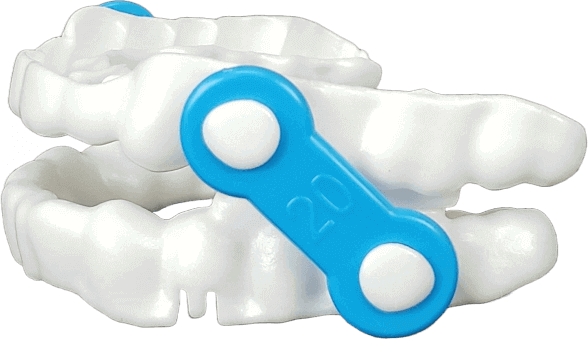
Custom oral appliances are a key part of treatment to help stabilize the jaw and reduce strain, but they’re not created or managed the same way across providers. A TMJ specialist designs these appliances based on detailed analysis of your joint position, muscle activity, and bite function—not just to protect your teeth, but to improve how the entire system works. They also monitor your response over time and make precise adjustments as your joint and muscles adapt, ensuring the appliance continues to support lasting relief rather than just short-term protection.
Additionally, TMJ treatment is not a one-time fix; as the joint stabilizes and muscles adapt, your needs can change. Throughout the course of your treatment, a TMJ specialist will monitor you for things like changes in pain or discomfort; improvements in movement and function; muscle response and tension patterns; and sleep quality and related symptoms. Treatment is then adjusted to keep moving you in the right direction. This ongoing, responsive approach helps prevent relapse and supports more consistent, long-term results.
4. They can address complex or chronic cases that haven’t responded to other treatments.
When the root cause of a TMJ disorder hasn’t been fully identified, treatment tends to fall short. Because of their training, diagnostic tools, and comprehensive approach, TMJ specialists are often able to help patients who haven’t found relief through more general care. By addressing the full picture—joint, muscles, bite, and airway—a TMJ specialist can often uncover what was previously missed and build a plan that finally moves things forward..
This includes cases involving:
- Long-standing or worsening jaw pain.
- Persistent headaches or facial pain.
- Jaw clicking, locking, or limited movement.
- Symptoms that return despite prior treatment.
- Overlapping conditions like TMJ disorders and sleep apnea.
Why Training, Experience, and Expertise Matter for a TMJ Specialist
TMJ disorders are complex, and they’re often misdiagnosed or only partially treated when approached without specialized training. The jaw joint, surrounding muscles, bite, and airway all influence one another, which means identifying the true source of the problem requires more than a basic exam or a single area of focus.
Without that level of expertise, treatment often becomes reactive—focused on managing pain, protecting teeth, or addressing visible symptoms—rather than correcting the underlying dysfunction. This can lead to temporary relief, ongoing frustration, or even worsening symptoms over time if the root cause is missed.
A TMJ specialist is trained to evaluate function at a much deeper level. That includes understanding how joint position, muscle activity, bite forces, and airway dynamics interact, and using that information to guide both diagnosis and treatment. Instead of relying on assumptions or isolated findings, care is built on objective data, clinical experience, and a clear understanding of how these systems work together.
At Restore TMJ & Sleep Therapy, treatment is led by Dr. Katherine S. Phillips, whose background reflects a focused, advanced level of training in both orofacial pain and dental sleep medicine. Her credentials and experience allow her to approach TMJ disorders with a level of precision and depth that goes beyond general or cosmetic dentistry.
These include:
- Board-certified in Orofacial Pain.
- Board-certified in dental sleep medicine.
- Fellowship status in the American Academy of Orofacial Pain (AAOP).
- Past President of the American Board of Dental Sleep Medicine (ABDSM).
- Advanced training in diagnosing and treating TMJ disorders and orofacial pain.
- Extensive experience managing complex, chronic cases involving the jaw, muscles, and airway.
- Ongoing involvement in research, education, and advancement of TMJ and sleep-related care.
These distinctions are more than titles—they reflect years of focused training, peer-reviewed expertise, and a commitment to evidence-based, interdisciplinary care.
For patients,
TMJ care from a trained, experienced specialist like Dr. Phillips translates into a more accurate diagnosis, a more targeted treatment plan, and a higher likelihood of long-term relief. When TMJ disorders are evaluated and treated with this level of expertise, care becomes more efficient, more predictable, and ultimately more effective.
Restore TMJ & Sleep Therapy: Effective, Comprehensive Care from Experienced TMJ Specialists
At Restore TMJ & Sleep Therapy, treatment is built on a combination of clinical experience, advanced technology, and refined techniques designed to deliver real, measurable results. Dr. Phillips and her team provide focused expertise in TMJ disorders and airway health, allowing for a more complete and coordinated approach to care. From precise diagnostics to the careful design and delivery of custom oral appliances, every step is guided by how your jaw and muscles function in real time. The result is treatment that is not only more accurate, but more responsive, helping you move forward with greater comfort, stability, and long-term improvement.
If you or a loved one have been suffering from TMJ or related pain, don’t waste any more time trying treatment that doesn’t work.
Schedule a consultation with the TMJ specialists at Restore TMJ & Sleep Therapy today and start seeing real results.
Contact Us Today For A Consultation!
Contact Us

Read more blogs from REstore TMJ: