-2700x842-1920w.png)




How Jaw Position Can Lead to Airway Collapse During Sleep
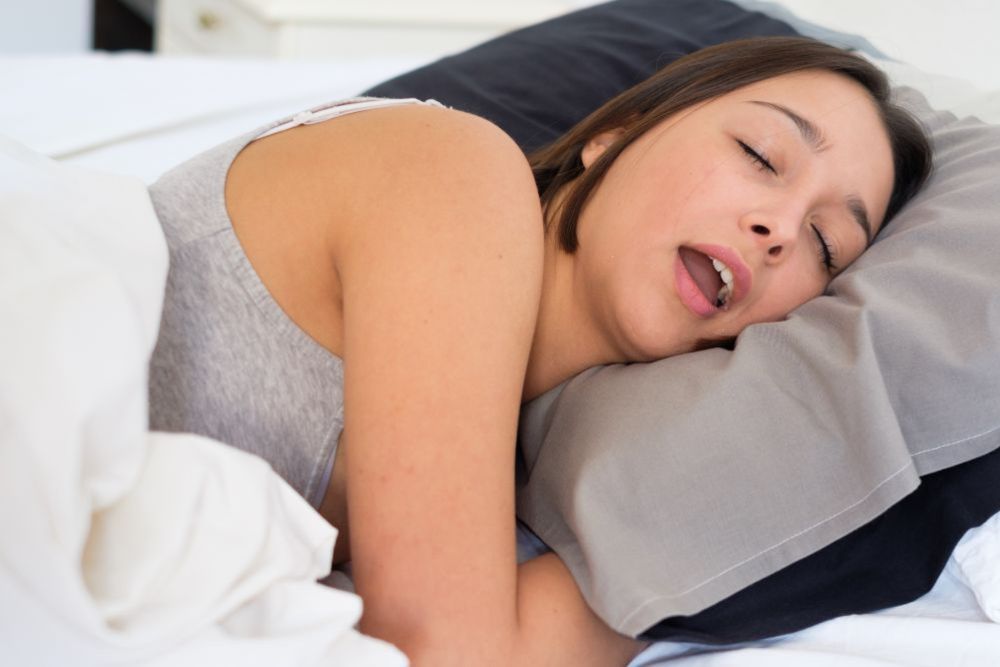
The position of your lower jaw affects where your tongue rests and how much space is available for air to pass through your throat. During sleep, a naturally narrow airway or a lower jaw positioned farther back can make it easier for the tongue and surrounding soft tissues to obstruct breathing. Repeated airway obstruction is a defining feature of obstructive sleep apnea (OSA), a condition that can interfere with sleep quality and overall health. Because jaw position influences the amount of space available for airflow, oral appliance therapy can help certain patients by holding the lower jaw in a carefully selected forward position during sleep, reducing airway obstruction and improving breathing.
At Restore TMJ & Sleep Therapy in The Woodlands, Dr. Katherine Phillips and Dr. YC Joseph FischerHahm specialize in evaluating and treating TMJ disorders, orofacial pain, and sleep-related breathing problems. Our team examines how jaw anatomy, joint function, tongue position, and other factors may contribute to nighttime breathing difficulties. This comprehensive approach helps us identify appropriate treatment options while accounting for the health and function of the jaw.
How Your Jaw Anatomy and Position Affect Your Airway
Your lower jaw, or mandible, is connected to your tongue through several muscles and other tissues. Because these structures are connected, the position of your jaw affects where your tongue rests and how much space is available behind it. Moving the lower jaw forward can bring the tongue forward and increase airway space, while a jaw positioned farther back may leave less room for air to pass through your throat.
How the Anatomy and Position of Your Jaw Influence Airway Space
The natural size, shape, and position of your jaw help determine how much space is available for your tongue and how easily air can pass through your upper airway.
Several physical characteristics that can influence the relationship between jaw position and airway space include:
- A recessed lower jaw. Also called mandibular retrognathia, this occurs when the lower jaw sits farther back in relation to the upper jaw. The tongue may consequently sit closer to the back of the throat.
- A smaller lower jaw. A relatively small lower jaw can provide less space for the tongue, increasing crowding within the mouth and upper airway.
- Differences in upper and lower jaw alignment. The way the jaws fit together can affect tongue position and the space available behind it.
- The size and position of the tongue. A relatively large tongue, particularly when combined with limited jaw space, may contribute to narrowing behind the tongue.
These anatomical characteristics become particularly important during sleep. As your muscles relax, the lower jaw and tongue may move backward, further reducing the space available for airflow. Someone with a naturally recessed lower jaw, for example, may already have limited space behind the tongue, making even a small backward shift more likely to narrow the airway.
Sleeping on your back can make this more pronounced because gravity affects the position of the tongue and other soft tissues. Other structures, including the soft palate, tonsils, and surrounding throat tissue, can also contribute to airway narrowing. Together, these factors help explain why some people are more vulnerable to airway obstruction during sleep, although jaw anatomy and position alone cannot establish whether someone has sleep apnea.
How Airways Can Collapse During Sleep and What That Means for Breathing
The upper airway is surrounded by muscles and soft tissues that help keep it open. When you are awake, these muscles help maintain enough space for air to pass through your throat. During sleep, muscle activity naturally decreases, making the airway more likely to narrow. For most people, the airway remains open enough for normal breathing, but a naturally narrow or less stable airway may be more vulnerable to collapse.
What Happens When Your Airway Naturally Narrows or Collapses
One muscle involved in keeping the airway open is the genioglossus, which helps move the tongue forward and prevents it from blocking the throat. As you fall asleep, activity in this muscle and other upper-airway muscles decreases. This is a normal part of sleep, and most people continue breathing without significant blockage.For someone whose airway is already narrow or more likely to collapse, however, the reduction in muscle activity can make breathing more difficult.
Each time you inhale, pressure inside the throat decreases as air is drawn toward the lungs. If the airway is sufficiently open and stable, air can move through it without significant restriction. In a narrower or less stable airway, these pressure changes can cause the surrounding soft tissues to move inward, further restricting airflow. The airway may then narrow enough to partially block breathing or close completely for a short period.
Depending on how much the airway narrows,
this can cause two types of breathing interruptions:
- Hypopneas. Breathing becomes significantly reduced, along with a drop in oxygen levels or a brief disruption of sleep, depending on the criteria used.
- Obstructive apneas. Airflow stops or nearly stops for at least 10 seconds even though the body continues trying to breathe.
During these events, oxygen levels may fall, and the brain may briefly increase alertness or trigger a short awakening that helps reopen the airway. Breathing then resumes, sometimes with a gasp, snort, or sudden movement. These interruptions can happen repeatedly throughout the night without you fully waking up or remembering them.
Repeated airway collapse can disrupt your normal sleep cycles, leaving you feeling tired even after a full night's sleep. Over time, untreated obstructive sleep apnea is also associated with increased risks of high blood pressure, cardiovascular problems, and other health complications.
Signs That Your Airway May Be Collapsing During Sleep
Because airway blockage happens while you are asleep, you may be unaware of the breathing interruptions themselves. A bed partner may notice changes in your breathing before you recognize that anything is wrong.
According to the National Institutes of Health, symptoms that may indicate sleep apnea include:
- Loud or frequent snoring, particularly when interrupted by periods of silence.
- Gasping, choking, or snorting during sleep.
- Pauses in breathing noticed by someone else.
- Frequent nighttime awakenings or restless sleep.
- Morning headaches or a dry mouth upon waking.
- Persistent daytime fatigue, sleepiness, or difficulty concentrating.
These symptoms can also occur with other sleep disorders or medical conditions, and not everyone with sleep apnea snores noticeably. A clinical evaluation and appropriate sleep testing can determine whether airway obstruction is occurring, how frequently breathing is interrupted, and whether oxygen levels are affected. This information helps establish the type and severity of sleep apnea and guide treatment decisions.
How Oral Appliance Therapy Can Help Prevent Airway Collapse During Sleep
For patients whose airway blockage can be improved by changing their jaw position, oral appliance therapy offers a way to maintain a more favorable position throughout the night. This treatment uses a custom-made oral appliance called a mandibular advancement device, which fits over the teeth and holds the lower jaw slightly forward during sleep.
Moving the jaw forward can create more space behind the tongue and help surrounding soft tissues resist collapse, reducing the likelihood of airway blockage.
The appliance is worn during sleep and removed in the morning. It can be gradually adjusted to find a jaw position that improves airflow without placing unnecessary stress on the jaw joints, muscles, or teeth. The American Academy of Sleep Medicine and American Academy of Dental Sleep Medicine recommend custom, adjustable appliances when oral appliance therapy is prescribed for adults with obstructive sleep apnea.
Oral appliance therapy is an established, noninvasive treatment option, although its effectiveness varies from person to person. A thorough evaluation, individualized adjustments, and follow-up sleep testing help determine whether the appliance is adequately controlling breathing interruptions. If sufficient improvement is not achieved, additional adjustments or another treatment approach may be needed.
How a TMJ and Sleep Therapy Expert Can Help Improve Jaw Position and Prevent Airway Collapse
When jaw position contributes to airway obstruction during sleep,
a TMJ specialist with advanced training in dental sleep medicine can evaluate how the jaw, bite, joints, and muscles work together to influence breathing. This is especially important for patients with jaw pain, clenching, grinding, or other TMJ symptoms that may affect their treatment options.
At Restore TMJ & Sleep Therapy, Dr. Katherine Phillips brings more than a decade of specialized experience in orofacial pain and dental sleep medicine. A Fellow of the American Academy of Orofacial Pain and past president of the American Board of Dental Sleep Medicine, she has treated thousands of patients and provided more than 8,000 custom oral appliances. Her approach focuses on two important aspects of care: evaluating how jaw position affects the airway and finding a position that improves breathing while protecting jaw health.
Evaluating How Your Jaw Position Affects Your Airway
Dr. Phillips and Dr. FischerHahm examine jaw movement, bite alignment, joint health, and the relationship between the jaw, tongue, and airway. They also review your symptoms, medical history, and sleep study results, using advanced diagnostic tools and imaging when appropriate to identify factors that may influence treatment. In addition, our clinic works with sleep physicians, ENTs, and other specialists when necessary to coordinate testing and care, ensuring other possible causes of airway obstruction are considered when developing your treatment plan.
Finding the Right Jaw Position and Monitoring Your Progress
When oral appliance therapy is appropriate, the appliance is gradually adjusted to find a position that improves breathing without placing unnecessary stress on the jaw joints, muscles, or teeth. Patients with existing TMJ disorders may need additional care or a modified treatment approach.
Ongoing monitoring helps determine whether treatment is working. Follow-up sleep testing, coordinated with the treating sleep physician, can confirm whether breathing interruptions are adequately controlled. Dr. Phillips and Dr. FischerHahm use these results to guide further adjustments while monitoring jaw comfort, appliance fit, and changes in the bite to support better breathing and long-term jaw health.
Improve Your Jaw Position for Better Breathing at Restore TMJ & Sleep Therapy in The Woodlands
At Restore TMJ & Sleep Therapy, Dr. Katherine Phillips and Dr. YC Joseph FischerHahm bring decades of combined experience and nationally recognized expertise in orofacial pain, TMJ disorders, and dental sleep medicine. Both are board-certified specialists who have contributed to their fields through professional leadership, education, and clinical practice. Their expertise allows our team to manage complex cases involving overlapping jaw, muscle, and airway concerns, using advanced diagnostics, objective sleep data, and evidence-based treatment plans tailored to each patient's needs.
Our comprehensive approach also includes collaboration with sleep physicians and other specialists to coordinate care, monitor treatment effectiveness, and make adjustments as your needs change. If you've been diagnosed with obstructive sleep apnea or suspect your jaw position may be affecting your breathing,
contact Restore TMJ & Sleep Therapy today to schedule a consultation and discuss your treatment options.
Contact Us Today For A Consultation!
Contact Us

Read more blogs from REstore TMJ: